
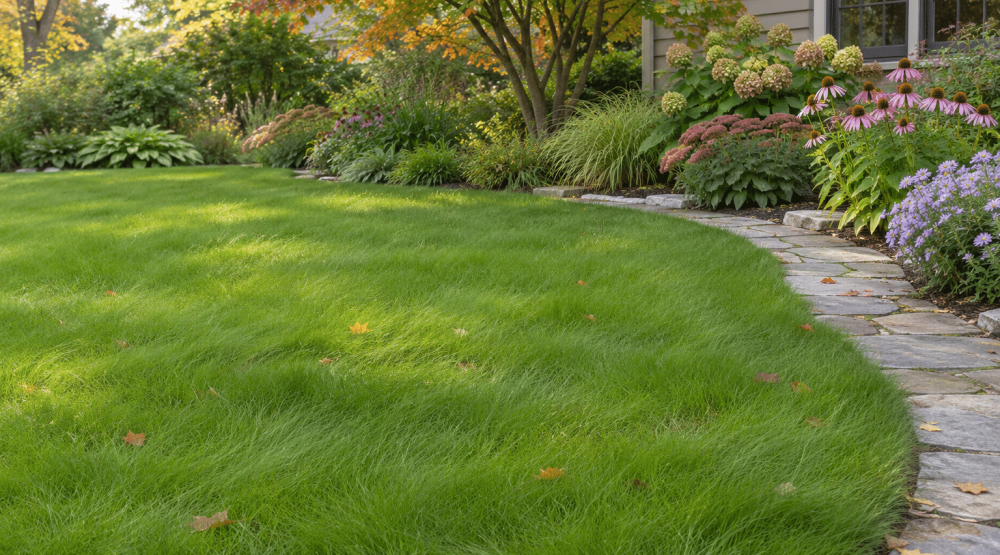
A low-grow or no-mow lawn uses grasses or other plants selected to reduce regular mowing. In the Upper Midwest, many no-mow grass mixes contain fine fescues, which can be maintained with fewer cuts or allowed to form a softer, flowing lawn. The name describes a management approach, not a promise that the yard will never need care.
For Chicago-area homeowners, the important question is whether the lawn fits the site and how the space is used. A lightly used side yard and a backyard full of running children or dogs may need different solutions.
What Do “Low-Grow,” “Low-Mow,” and “No-Mow” Mean?
These labels are not one universal grass species. “Low-grow” usually suggests slower growth or a shorter habit. “Low-mow” emphasizes fewer cuts. “No-mow” often describes grass allowed to develop its natural arching appearance with occasional maintenance.
Check the actual seed label and management instructions. Two products with similar names can contain different species and produce different heights, textures, and results.
Fine Fescues Are a Common Choice
The University of Minnesota’s guidance on no-mow landscapes explains that mixes marketed this way commonly combine fine-fescue species. Examples include hard fescue, sheep fescue, Chewings fescue, and creeping red fescues.
These grasses have narrow blades and can suit lower-input landscapes when the site and management are appropriate. An unmown stand looks different from a tightly clipped conventional lawn: blades bend and overlap, and seedheads may appear seasonally.
Fine fescue is also different from tall fescue. Choose by species, cultivar, and intended use rather than assuming every fescue behaves the same way.
Where Can a Low-Mow Lawn Work Well?
Potential locations include lightly used lawn areas, landscape transitions, and spaces where a relaxed appearance fits the design. Before selecting a mix, evaluate:
- Light: Some fine fescues tolerate partial shade, but deep shade still limits growth.
- Drainage: A different seed mix does not correct persistent standing water.
- Traffic: Repeated play, pet activity, and foot traffic can challenge lower-input turf.
- Appearance: Decide whether you want a clipped lawn or a flowing, less uniform surface.
- Access: Keep practical routes to doors, utilities, and gathering spaces.
If the yard stays wet, address drainage problems before investing in a new lawn. Plant selection should follow an understanding of the site.
Does a No-Mow Lawn Still Need Maintenance?
Yes. Establishment requires careful seedbed preparation, moisture management, and weed control. An established area still needs inspection, leaf management, edge care, and occasional mowing where appropriate.
The University of Minnesota’s discussion of mowing no-mow areas describes why occasional cutting can be useful. Frequency depends on species, site conditions, seedheads, and the appearance you want; there is no single schedule for every lawn.
Lower-input grasses may reduce fertilizer or irrigation needs compared with a more intensively maintained lawn, but results vary. Avoid assuming the lawn will stay green through every drought or remain weed-free without attention.
Is Clover the Same as a No-Mow Grass Lawn?
No. Clover-containing lawns and flowering “bee lawns” are separate approaches that may include grasses and low-growing flowering plants. They can offer different visual and habitat benefits, but their establishment and care requirements differ.
Simply stopping mowing on an existing lawn is another different approach. It does not change the grass species already present or guarantee the appearance of a purpose-selected fine-fescue mix.
How Do You Convert an Existing Lawn?
Start by defining the result you want. A full renovation and overseeding an existing stand can produce different outcomes. Existing vigorous grass, perennial weeds, soil conditions, and seed-to-soil contact affect whether the desired plants can establish.
C.O.’s lawn seeding services provide a starting point for discussing site preparation and suitable options. Ask about the appropriate mix and timing for your property rather than assuming a particular no-mow product is included.
Early fall can be useful for cool-season lawn establishment, but late October may leave too little growing time for a successful conventional seeding project. Plan around the selected grass, local conditions, and the installation method instead of rushing to meet a calendar date. Check current municipal and association rules for maintained vegetation before changing the lawn’s appearance.
Plan a Lawn That Fits Your Property
A low-mow area can be one part of a broader residential landscape plan, with conventional turf kept where regular recreation or a clipped finish matters most. Our article on low-maintenance landscapes offers related design ideas.
Contact C.O. Landscaping & Natural Stone to discuss your Chicago-area lawn, maintenance goals, and options for a landscape that suits the way you live.