
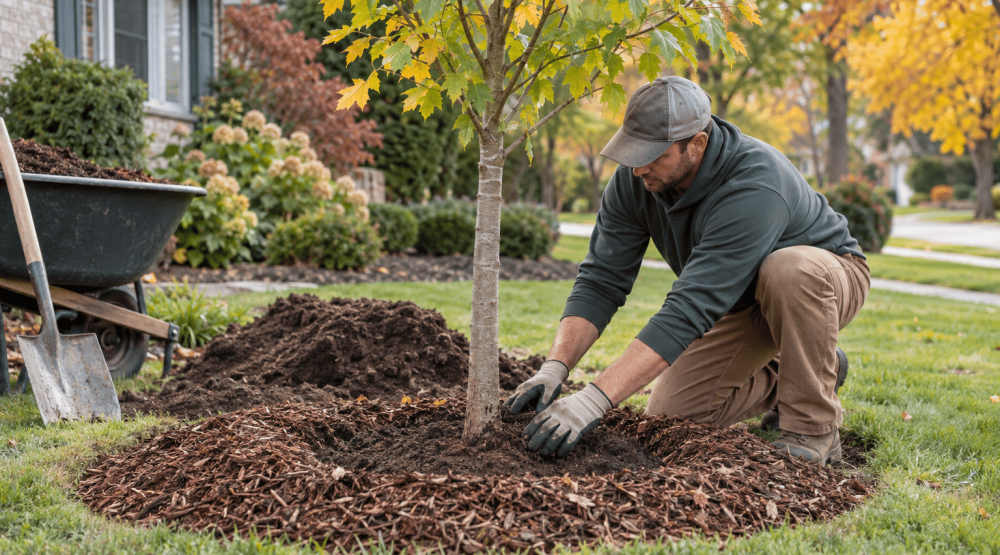
September is one of the best times to improve a Chicago-area landscape with new trees and shrubs. Cooler air reduces stress on new plantings, while the soil is often still warm enough for roots to begin establishing before winter. The key is choosing plants that fit the property and getting them in the ground early enough to settle in.
If you are planning a larger landscape update, C.O. Landscaping can help with professional tree and shrub planting, from selecting the right locations to completing the installation.
Is Fall a Good Time to Plant Trees and Shrubs in Chicago?
Yes—fall can be an excellent planting season in the Chicago area. The Morton Arboretum identifies roughly mid-August through mid-October as a useful fall planting window for many trees and shrubs in this region. Actual conditions matter more than a date on the calendar, however. Plant while the soil is workable and allow as much time as possible before a hard freeze.
Early fall is generally better than waiting until late fall. A September installation gives roots more time to grow into the surrounding soil, and homeowners have more time to water consistently before hoses are put away for winter.
Why Fall Planting Can Work So Well
New trees and shrubs lose moisture through their leaves. During fall, cooler temperatures reduce that demand compared with summer heat. At the same time, soil temperatures cool more slowly than the air, which can give roots a favorable period for establishment.
- Less heat stress: Mild days place less strain on newly installed plants.
- Warm soil: Roots may continue developing after top growth slows.
- More reliable moisture: Fall weather can help, although supplemental watering is still essential.
- A head start on spring: Properly established plants are better prepared when growth resumes.
What Should You Plant in Fall?
Many deciduous trees, evergreens, and landscape shrubs can be planted successfully in early fall. The best choice is not simply the plant that looks attractive at the garden center. It is the plant that fits the light, soil, drainage, available space, and exposure at your property.
Match the Plant to the Property
Before choosing a species or cultivar, consider:
- Hours of sun and the direction of exposure
- Whether the soil drains quickly or stays wet
- The plant’s mature height and width
- Distance from the house, walkways, overhead wires, and underground utilities
- Exposure to wind, road salt, reflected heat, or deer
- The amount of ongoing pruning and maintenance the plant will require
The “right plant, right place” approach reduces future problems and creates a landscape that looks intentional as it matures. It is especially important when trees or large shrubs are part of a complete residential landscaping plan.
Know When Spring May Be Safer
Some species establish slowly in fall or perform better when planted in spring. Very late fall installations also leave little time for roots to recover before the ground freezes. If you are unsure about a particular plant, ask a knowledgeable local professional and base the decision on the species, the site, and current weather—not a universal rule.
How to Plant Trees and Shrubs Correctly
Good planting technique matters as much as plant selection. A tree installed too deeply may struggle for years, even if it receives adequate water.
- Find the root flare. The point where the trunk widens into the main roots should remain visible at or slightly above the surrounding grade.
- Dig wide, not deep. Make the hole wider than the root ball but no deeper than needed to support it at the correct height.
- Inspect the roots. Loosen or correct circling roots according to the type and condition of the root ball.
- Backfill carefully. Use the existing soil unless site conditions require a broader soil-correction plan. Firm it gently without compacting it heavily.
- Water thoroughly. Soak the root zone after planting to settle the soil and remove large air pockets.
- Mulch properly. Apply a broad, shallow ring of mulch and keep it away from the trunk or stems. Avoid piling mulch into a “volcano.”
The University of Illinois Extension’s fall tree planting guidance also emphasizes correct depth, visible root flare, proper watering, and mulch placement.
Caring for New Plantings Before Winter
Newly planted trees and shrubs need consistent moisture until the ground freezes. Check the soil rather than watering by habit: it should be moist in the root zone, not saturated. Water deeply during dry periods, especially for evergreens, which continue losing moisture through their foliage during winter.
Keep mulch several inches away from trunks and woody stems. Prune only broken, damaged, or clearly problematic branches at planting time; major shaping is usually better handled at the appropriate time for the plant. Our guide to fall tree and shrub pruning explains what should—and should not—be trimmed before winter.
Depending on the property, young trees may also benefit from trunk protection against animals or winter injury. Staking should be used only when needed and removed once the root system can support the tree.
Plan Fall Tree and Shrub Planting With C.O.
A successful planting should improve the property for years, not create a maintenance problem later. C.O. Landscaping & Natural Stone can help Chicago-area homeowners select appropriate plants, place them correctly, and integrate them into the rest of the landscape.
Contact C.O. Landscaping to discuss fall tree and shrub planting for your property.