
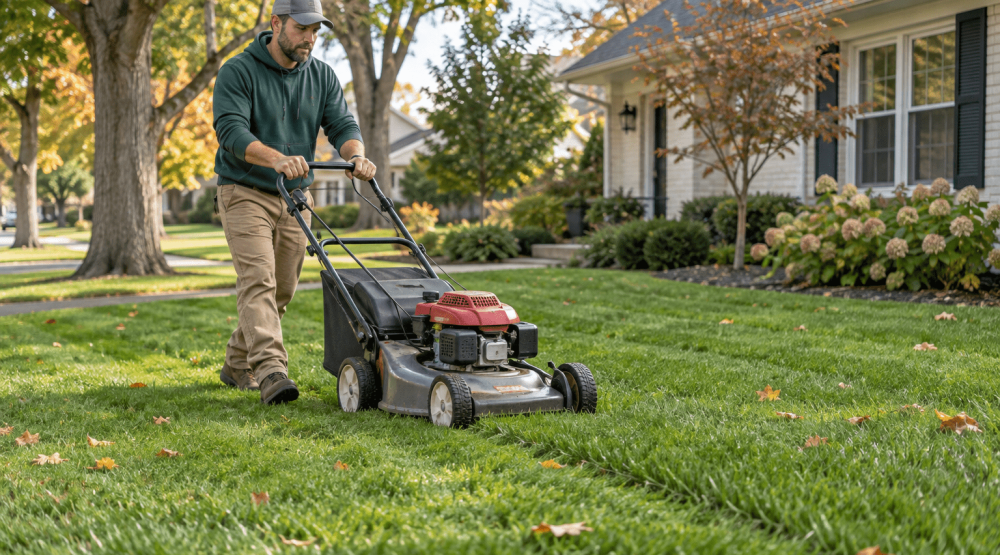
Chicago homeowners often wonder whether lawn mowing should end in September, October, or after the first frost. The best answer is to follow the grass rather than a fixed date. Keep mowing while the lawn is actively growing, and stop once growth has essentially ended for the season.
In many Chicago-area yards, that means mowing into October and sometimes later when mild weather continues. Your final mowing date will vary with temperature, rainfall, grass type, shade, and the condition of the lawn.
The Short Answer: Follow Growth, Not the Calendar
Cool-season grasses commonly used in Illinois can continue growing after summer heat fades. A light frost does not automatically mean the mowing season is over. If the lawn grows noticeably between cuts, it still needs mowing.
The University of Illinois Extension recommends mowing according to growth rate and following the one-third rule: remove no more than one-third of the grass blade in a single mowing. As growth slows, increase the time between cuts instead of stopping abruptly.
Signs Your Lawn Still Needs Mowing
Your lawn likely needs another cut when:
- The grass has grown well above its normal maintained height
- Blades are upright and actively growing after mild, wet weather
- Leaves and long grass are beginning to form a dense mat
- The soil is firm enough to support the mower without rutting
Avoid mowing when turf is frozen, frost-covered, waterlogged, or unusually soft. Foot and mower traffic can damage grass blades and compact wet soil.
How High Should the Final Cut Be?
Most Illinois lawns perform well at about 2½ to 3 inches, depending on grass species and conditions. The last cut can be slightly shorter than your regular mowing height, but it should not be a dramatic scalp.
Leaving grass excessively tall can cause it to fold over and trap moisture beneath snow or wet leaves. Cutting it extremely short removes valuable leaf tissue and can expose the crown of the plant to stress. A moderate final height keeps the lawn tidy without weakening it before winter.
If the grass is overgrown, lower the mowing height gradually over two or more cuts. Continue to follow the one-third rule rather than removing several inches at once.
What Should You Do With Leaves and Clippings?
A light layer of dry leaves can often be mulched into small pieces with a mower and left on the lawn. Thick or wet leaves should be removed or redistributed so they do not smother the turf. The goal is to prevent a dense mat that blocks light and air.
Grass clippings can usually stay on the lawn when you mow regularly. Short clippings break down and return nutrients to the soil. If clippings form heavy piles, spread or collect them so they do not cover the grass.
Lawn Care After the Final Mow
Once growth stops, a few final tasks can help prepare the yard for winter:
- Remove heavy leaf cover and fallen branches
- Clean up lawn edges, beds, and hardscape surfaces
- Inspect low areas where water collects
- Clean the mower deck and sharpen or replace the blade before spring
- Mark thin or bare areas that may need repair when growing conditions return
Fall lawn care is most effective when the tasks work together. Read why fall fertilization supports root development and how aeration and overseeding can improve next spring’s lawn. For larger bare areas or a lawn that needs a fresh start, professional sod and seeding services may be appropriate.
Common Late-Season Mowing Mistakes
- Stopping too early: Overgrown grass can mat down and hold moisture.
- Scalping the lawn: Removing too much blade tissue creates unnecessary stress.
- Mowing wet or frozen turf: This can tear grass, leave ruts, and compact soil.
- Using a dull blade: Ragged cuts take longer to recover and make the lawn look brown.
- Ignoring heavy leaves: A thick leaf layer can block light and air from reaching the turf.
Schedule Fall Lawn Maintenance
If keeping up with late-season mowing, leaves, and property cleanup is becoming difficult, C.O. Landscaping & Natural Stone can help. Our seasonal landscaping maintenance keeps Chicago-area properties orderly as fall turns to winter.
Contact C.O. Landscaping to discuss fall lawn care for your home or commercial property.